Short answer
Premium auditoriums offer a larger screen, higher brightness and contrast, immersive sound, wider and more comfortable seats or in-seat service compared with a standard hall. The main types are premium large format (PLF), VIP/luxury halls and experience formats with motion seats or images extending onto the side walls. The right format depends on the site's audience profile, the hall's geometry and the ticket price it can support.
Types of premium auditorium
| Type | What stands out | Technical needs |
|---|---|---|
| Premium large format (PLF) | Wall-to-wall screen, high brightness, immersive sound | High-output (often RGB) laser, suitable hall geometry, immersive audio |
| Branded premium formats | An experience standard defined by the format owner (e.g. IMAX, Dolby Cinema) | The owner's design and certification rules and a commercial agreement |
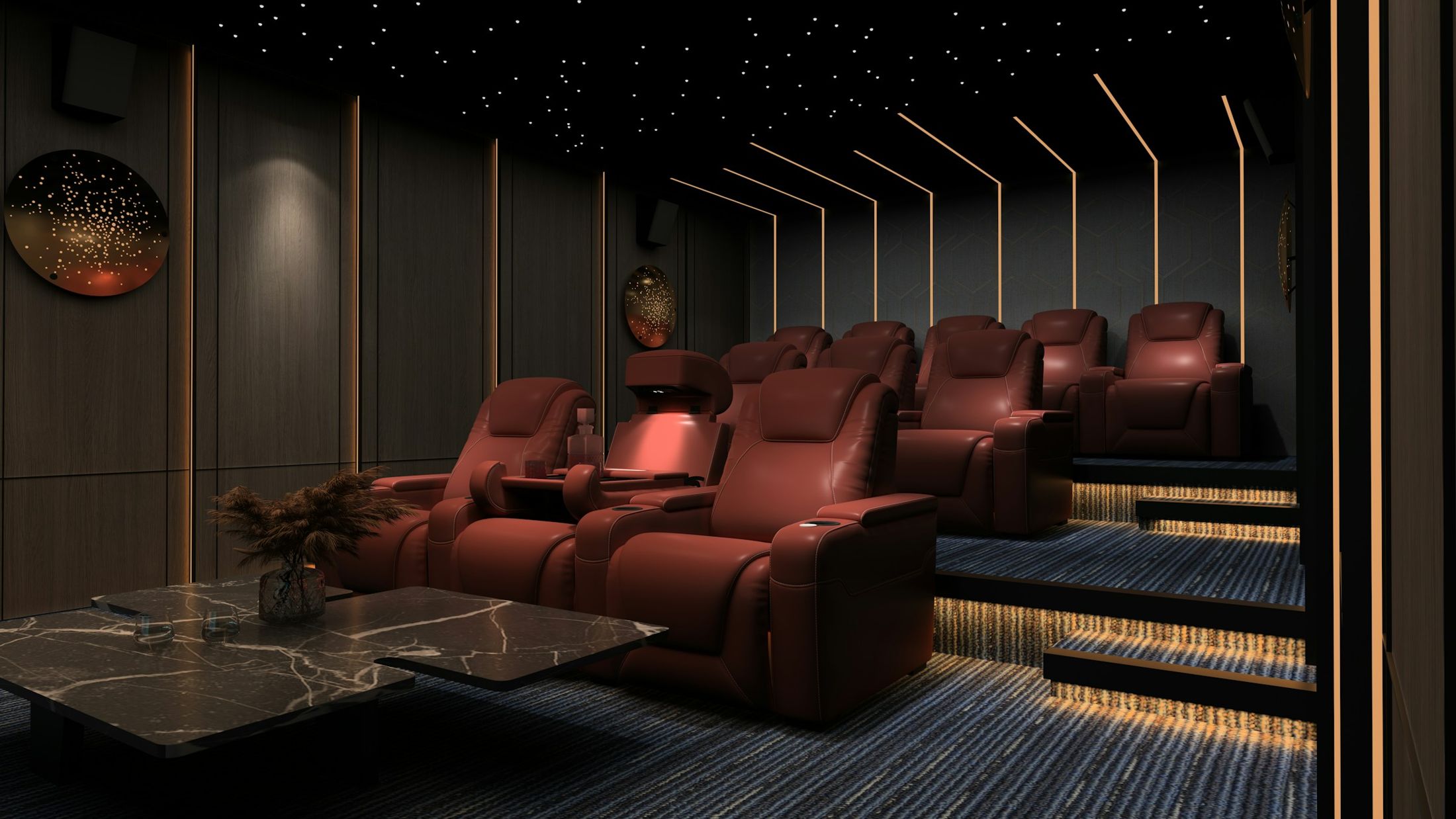
| VIP / luxury hall | Few wide recliner seats; in-seat food and drink service | Sightlines for the seating plan, service aisles, kitchen-to-hall flow |
| Experience formats | Motion seats, environmental effects or images extending to side walls (e.g. 4DX, ScreenX) | The format owner's system, extra structure and maintenance |
Key design decisions
- Screen and sightlines: the bigger the screen, the more critical first-row distance and viewing angles; the seating plan is drawn with the screen.
- Light: reaching target brightness on a large screen needs a high-output projector. See our projector guide for the calculation.
- Sound: sound is a core part of the premium experience; immersive audio is designed together with acoustics and isolation. More: sound guide.
- Seating: recliners reduce capacity; the loss must be covered by higher ticket prices and food & beverage revenue.
- Service flow: in VIP halls, ordering, serving and clearing are planned so they don't disturb the picture and sound.
The investment logic
A premium hall aims for more revenue from fewer seats. The decision rests on these questions:
- Can the site's audience support a premium ticket price?
- Which hall in the existing complex has the best geometry for a premium format?
- How many years until the capacity loss is offset by higher ticket and F&B revenue?
- Is a branded format or your own premium concept the better fit?
- Are extra maintenance and staff costs in the operating budget?
Converting an existing hall
Instead of new build, an existing hall can be converted: a larger screen, a laser projector, a new sound system and a reworked seating plan. The hall's structural dimensions (ceiling height, rake, throw distance) decide which options are feasible, so the work starts with measuring the hall.
Frequently asked questions
What is a premium cinema auditorium?
Is a VIP hall the same as premium large format (PLF)?
Can an existing hall be converted to premium?
How much capacity do recliners take away?
AHA DCS plans the technical design and in-hall service flow of premium and VIP auditoriums and evaluates the investment against its return.
Digital cinema solutions